Homeownership · 5 min read
Before the First Freeze: 10 Things I’d Check Around My Georgia Home
A practical winter checklist for pipes, heat, drainage, safety, and the home you may have already moved out of.
 By Simon Mandell
November 18, 2026
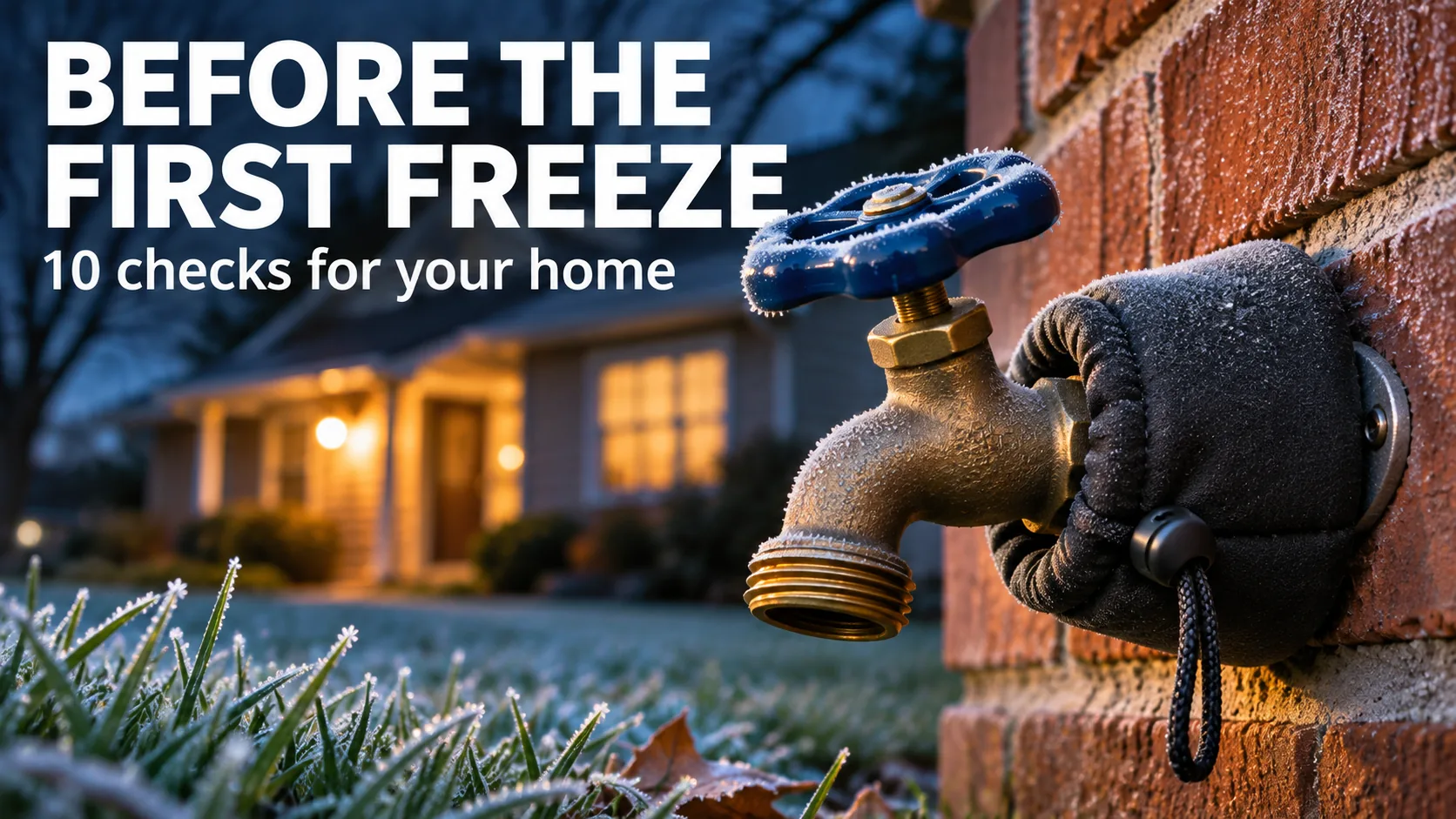
Nobody gets excited about buying a faucet cover. But a wet ceiling or a frozen water line will get your attention pretty quickly.
If we were talking at your kitchen table about getting the house ready for winter, I’d start with what could create the biggest problem. You don’t need to replace everything. You need to know what needs attention before the weather makes it urgent.
Here are ten checks I’d put on the list.
- Disconnect the garden hoses. Drain and store them. Have outdoor faucets protected appropriately for your plumbing; where there is a dedicated interior shutoff, follow the system’s draining instructions. A cover doesn’t fix a leaking faucet.
2. Find the vulnerable water lines. The Red Cross identifies unheated areas and poorly insulated exterior walls as common trouble spots. Check garages, crawlspaces, and exposed plumbing. Ask a plumber about suitable insulation or listed heat cable when needed; don’t improvise an electrical wrap.
3. Know where the water shutoff is. Could you find it quickly, in the dark? Is it accessible? If you’re unsure which valve controls the house, have a plumber identify it. That’s useful knowledge whether you’re staying or handing the home to a buyer.
4. Have the heating system checked. CDC recommends annual service by a qualified technician. Address unusual operation before a cold night. Check the filter and follow the equipment’s replacement schedule; the wrong filter or a blocked return can create its own problems.
5. Deal with obvious drafts. Weatherstripping and appropriate caulking can help. For bigger comfort problems, consider an energy assessment instead of guessing that every window needs replacing. Don’t block required combustion-air openings or equipment vents.
6. Check gutters, downspouts, and drainage. I’d walk the outside after rain and look for overflow or water collecting near the foundation. Arrange safe cleaning and repairs; roof access and high ladder work belong with someone equipped for them.
7. Look at roof leaks and questionable branches. CDC includes roof repairs and branches that could fall on the home in its weatherproofing guidance. A small stain deserves investigation before you paint over it. Have a qualified tree professional assess concerning limbs rather than trying to remove them yourself.
8. Test smoke and carbon monoxide alarms. Follow their instructions for placement, testing, and replacement. EPA recommends monthly testing. If you use a fireplace or wood stove, arrange the appropriate chimney inspection before use. The appliance working last winter doesn’t establish its condition now.
9. Prepare outdoor systems and an outage plan. Have irrigation and pool equipment winterized according to their instructions. Keep flashlights, charged backup batteries, and a plan for staying warm. Never use a range or oven to heat the house. Portable generators belong outdoors, at least 20 feet from buildings and away from openings, following manufacturer guidance.
10. Give an empty house its own plan. The Red Cross recommends leaving heat at no less than 55°F while away in cold weather. That isn’t a guarantee against frozen pipes. Have someone check the house, confirm utilities remain active, and ask your insurer about requirements. For prolonged vacancy, ask a plumber about professional winterization.
During severe cold, the Red Cross also advises allowing warmth around vulnerable cabinet plumbing and a small cold-water trickle at faucets serving exposed pipes. Keep cleaners away from children and pets if cabinets are open. If a pipe freezes, never use an open flame to thaw it; call a plumber if you can’t safely locate or address it.
My real estate point is simple: maintaining the house protects your options. If you decide to sell, service records and completed repairs give us something useful to show a buyer. An ignored leak gives them something to negotiate.
Thinking of listing this winter? Send me the items you’re considering tackling. We can separate routine maintenance from work that deserves a closer look before you spend.
Sources
- American Red Cross: Frozen Pipes
- CDC: Preparing for a Winter Storm
- CDC: During and After a Winter Storm
- EPA: Winter Weather and Indoor Air Quality
- Department of Energy: Home Energy Checklist
Sources checked November 18, 2026. Follow your equipment instructions and local utility guidance; a checklist cannot establish the condition of your home’s systems.
Every property and situation is different. These articles offer general considerations, not a property-specific valuation or a guarantee of results.
Explore more stories ↗Have a home or a question in mind?
Tell me where you are looking or selling, your timeline, and what you need help deciding.
Call Simon: 678-227-8749Text Simon: 678-227-8749 ↗