Homeownership · 5 min read
Termites in Your Home? Here’s What I’d Want You to Look For
Separate active infestation, treatment, damage repairs and what your service agreement actually covers.
 By Simon Mandell
November 20, 2026
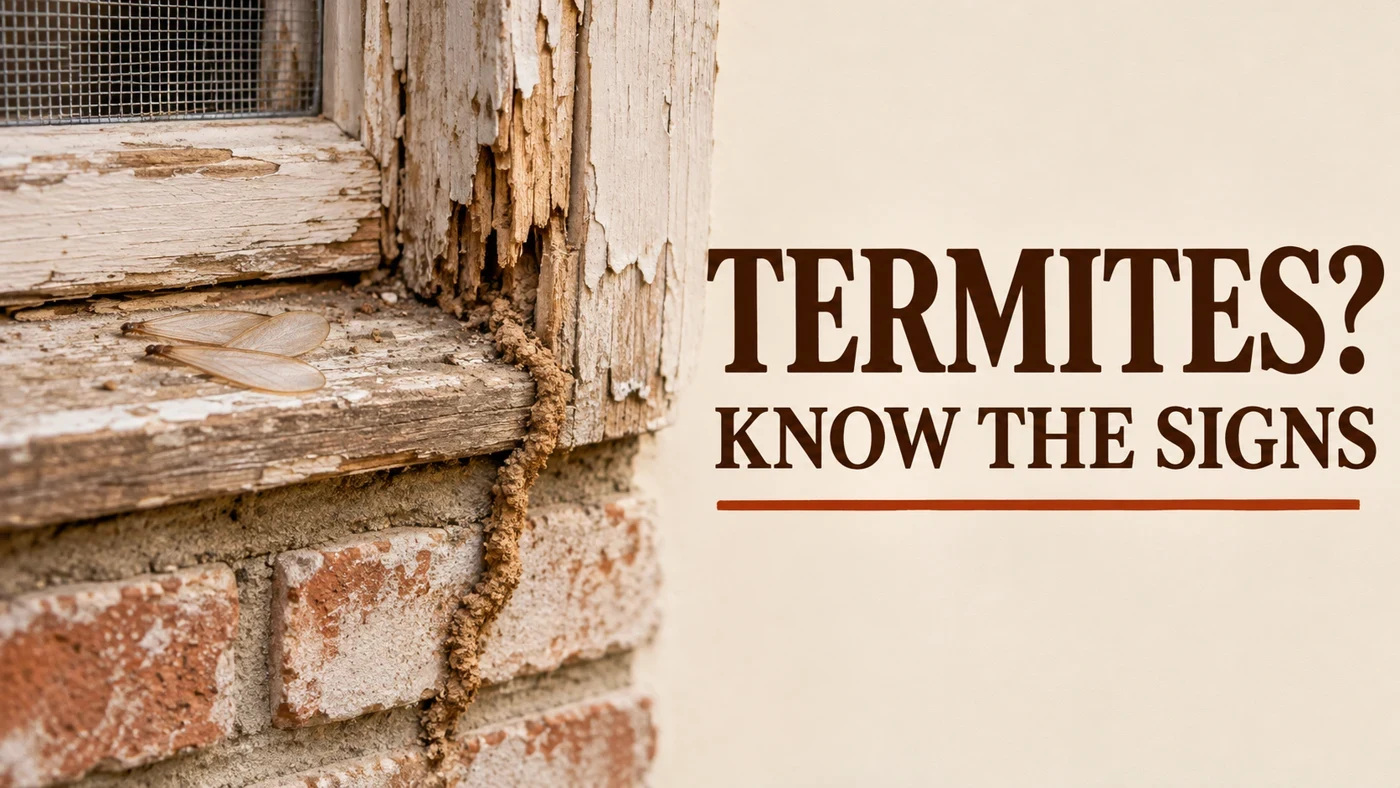
You find a little pile of wings by a window, or somebody notices a mud-colored tube along the foundation. The first thought is usually, “Please tell me that's not termites.”
I wouldn't ignore it. I also wouldn't decide the house is ruined from a photograph. The useful next step is finding out what is actually there.
UGA's February 10, 2026 termite guidance identifies swarmers inside a home and shelter tubes as signs that deserve attention. Outdoor swarms can mean a colony is nearby without proving the house is infested. UGA recommends annual inspections and professional help for structural termite treatment.
What would I want you to notice? Shed wings around windows or doors, mud-like tubes on foundation surfaces, and damaged wood are reasons to call a professional. None is a reason to start tearing things apart or spraying products around before the problem has been identified. Photograph what you can safely see and preserve the evidence for the inspection.
For a buyer or seller, I would separate the discussion into three questions: Is there active infestation? What treatment is needed? And what damage, if any, needs repair?
Those are related, but they're not interchangeable. Treating termites doesn't rebuild damaged framing. Old damage doesn't automatically establish that termites are active today. A pest company's findings may lead to a separate evaluation by a qualified repair contractor or structural professional.
That is where vague language causes trouble. “We had it treated” may be true, but a buyer still needs to understand when, by whom and what happened afterward. If repairs were made, where are the records? If access was limited, what couldn't be evaluated?
A termite bond or service agreement deserves the same attention. People sometimes use “bond” as though every contract offers the same protection. UGA explains the difference between retreatment and repair coverage. Read the actual current agreement: what does the company promise, what is excluded, what maintenance or inspections are required, and can coverage transfer to a buyer?
A low renewal price doesn't answer those questions. Neither does a verbal assurance that the property is “covered.” Ask the company to explain the terms in writing.
The Georgia Department of Agriculture provides license verification and consumer information. It also handles concerns about inaccurate Georgia Wood Infestation Inspection Reports. A report is useful evidence of the inspection performed; don't treat it as proof that every concealed piece of wood has been examined.
If you're selling, gather the treatment history, current contract, inspection reports and repair invoices before we list. Tell me what you know so we can address the disclosure paperwork accurately and bring in the right professional where needed. Covering damaged wood without understanding the cause isn't a selling strategy.
If you're buying, put this on the inspection calendar early enough to investigate and negotiate within your contract deadlines. We want enough time to understand the scope, cost and any lender requirements. A treatment proposal alone may leave the repair question unanswered.
Have a termite report, a bond renewal or something suspicious around the house? Let's organize the questions before you agree to treatment or a contract credit. The goal is a clear plan supported by the appropriate professionals.
*Sources reviewed November 20, 2026. Inspection findings, coverage and treatment requirements are property-specific.*
Every property and situation is different. These articles offer general considerations, not a property-specific valuation or a guarantee of results.
Explore more stories ↗Have a home or a question in mind?
Tell me where you are looking or selling, your timeline, and what you need help deciding.
Call Simon: 678-227-8749Text Simon: 678-227-8749 ↗