Buying · 5 min read
A Lower Mortgage Payment for Two Years Sounds Great. What Happens in Year Three?
Understand temporary payment subsidies, the full payment, and your financing alternatives.
 By Simon Mandell
October 20, 2026
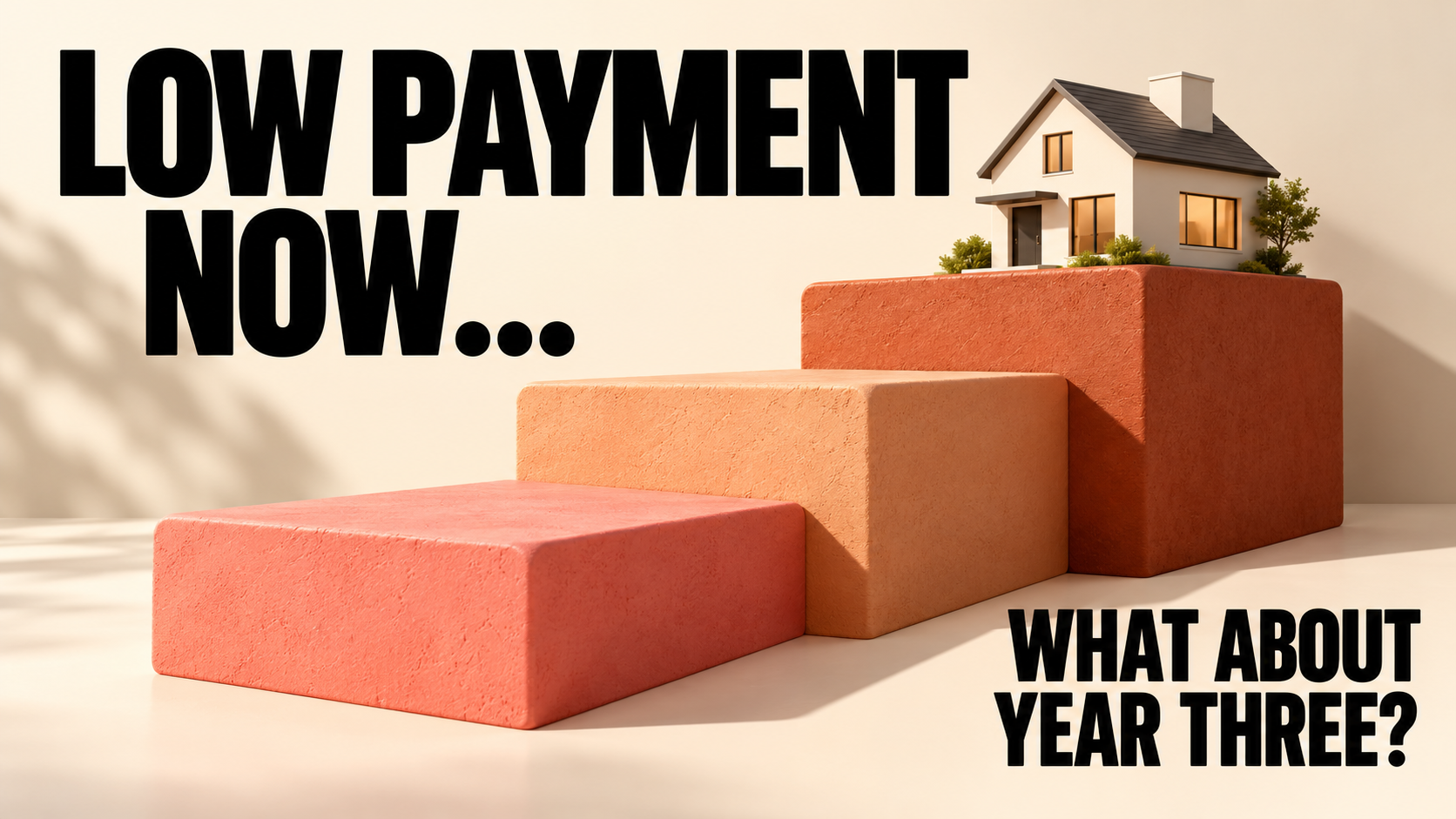
The first-year payment on a listing can look very attractive. If a 2-1 buydown is making that possible, let’s turn the page and look at year three before deciding whether the home fits.
Temporary relief can be helpful when you’re moving. I just don’t want the purchase depending on a refinance that may or may not be available later. We need to understand the full payment and compare what else the same seller contribution might do for you.
A temporary buydown uses an upfront subsidy to cover part of the mortgage’s principal-and-interest payment for a limited period. With a common 2-1 structure, the buyer’s portion is calculated using a rate two percentage points below the mortgage’s note rate during the first year, then one point below during the second year. After that, the buyer pays the full scheduled principal-and-interest amount.
The underlying mortgage rate does not become permanently lower. Freddie Mac describes these arrangements as temporary payment subsidies and explains that borrowers must qualify at the full rate under its requirements.
Assume a $350,000, 30-year fixed mortgage with a 7% note rate and a properly funded 2-1 buydown.
| Period | Rate used to calculate buyer’s subsidized portion | Buyer’s monthly principal-and-interest portion |
|---|---|---|
| First year | 5% | Approximately $1,879 |
| Second year | 6% | Approximately $2,098 |
| Third year onward | 7% | Approximately $2,329 |
These calculated examples are hypothetical, not current mortgage quotes. They exclude property taxes, homeowners insurance, mortgage insurance, HOA fees, and other costs. The full scheduled principal-and-interest payment is approximately $2,329 throughout. During the first two years, the subsidy covers the difference between that amount and the buyer’s portion.
Using unrounded calculations, that difference totals approximately $8,158 over two years. That money has to come from somewhere.
If the seller or builder offers to fund the buydown, I want to compare the complete deal. Could an allowable closing-cost contribution help you more? Would a different price or financing structure better fit your plans? Is the property competitively priced before we consider the incentive?
We also need the lender to confirm that the arrangement meets the loan program’s rules and contribution limits. A benefit can be valuable without being the best use of every negotiating dollar.
A later refinance depends on rates, income, credit, the home’s value, and the costs of the new loan. None of those is settled just because the listing advertises a lower payment today. The question I want answered before you buy is: “If refinancing doesn’t make sense, can you comfortably handle the full payment?” A temporary buydown may give you breathing room during a move. It should not require a future event to rescue the budget.
Before agreeing, I’d want written answers to these questions:
- What is the full payment, including estimated taxes and insurance?
- Who funds the subsidy?
- What happens to unused subsidy funds if I sell or refinance early?
- What other uses of the seller contribution are available?
- Is the advertised payment based on assumptions that apply to me?
Looking at a listing with a special financing offer? Send it to me. We can review the home’s price and terms, then work with your lender to understand what the payment looks like in year one, year two, and after the incentive ends.
Every property and situation is different. These articles offer general considerations, not a property-specific valuation or a guarantee of results.
Explore more stories ↗Have a home or a question in mind?
Tell me where you are looking or selling, your timeline, and what you need help deciding.
Call Simon: 678-227-8749Text Simon: 678-227-8749 ↗