Buying · 5 min read
The Drains Work. Should You Still Get a Sewer Scope Before Buying?
A working sink does not tell you everything about the buried line. Here is what to ask before closing.
 By Simon Mandell
November 22, 2026
The sink drains. The toilets flush. Nothing smells unusual while you’re walking through the house.
That is a good start. It does not tell us what is happening inside the pipe buried between the house and the public sewer.
When a buyer asks whether they need a sewer scope, I would first ask what we already know. Has the seller had recurring backups? Has any part of the line been repaired? Do we have the invoice, or only a memory that somebody “took care of it”? And does the home actually connect to public sewer, or are we talking about a septic system that needs a different evaluation?
Those questions belong early enough in the contract that we still have time to get useful answers.
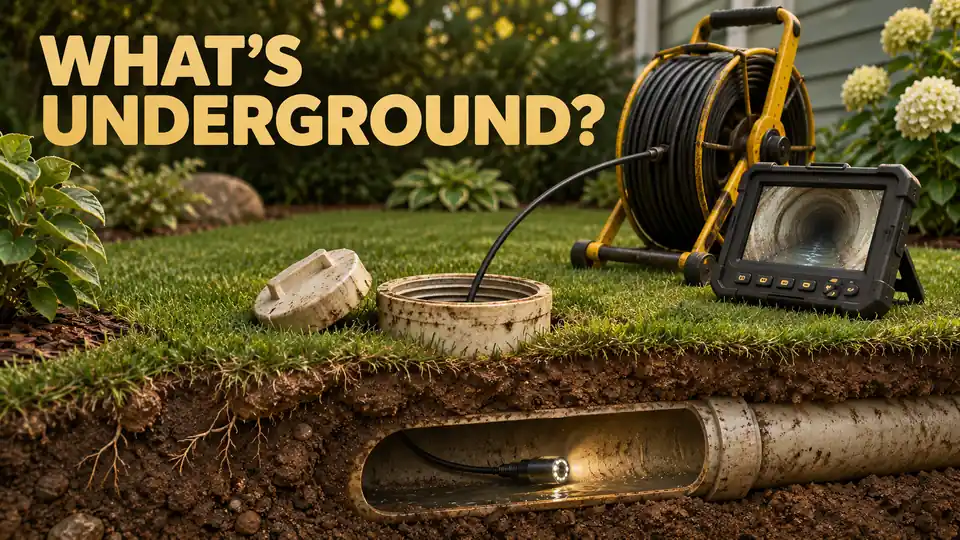
The American Society of Home Inspectors explains that a sewer lateral camera inspection is a specialized service outside a standard home inspection. The buried line cannot be examined visually without the equipment. A scope generally involves a camera traveling through the main lateral, with video and a written report. It does not necessarily include the smaller branch lines serving the kitchen, laundry or other fixtures. Ask what the inspection covers rather than assuming “sewer inspected” means every pipe was checked.
That distinction matters. I would rather have an inspector tell you exactly what they could and could not see than hand you a reassuring sentence that leaves half the question unanswered.
What I would want in the report
Ask the professional where the camera entered, how far it traveled, whether the full intended section was accessible, and whether anything prevented a complete view. If they identify a concern, ask them to explain its location and significance in plain language. Keep the recording with the report. A blurry screenshot and an urgent recommendation are not the same as a clearly documented finding and a repair proposal.
I would use a qualified sewer-scope professional and a licensed plumber when plumbing evaluation or repair advice is needed. A camera result is information about observed conditions, not a guarantee that a line will never fail. If the inspection is incomplete, we need to decide whether additional access or investigation is practical before the relevant contract deadline.
Who pays for a problem is another question entirely.
Gwinnett County’s Water Resources guidance says homeowners are responsible for their private lateral and recommends considering a lateral inspection when buying a house. The county distinguishes private components from parts it maintains, including certain cleanouts near the right-of-way. That does not make every underground pipe a county responsibility. Confirm the actual service provider and the responsibility boundary for the address; do not carry one county’s diagram into a different jurisdiction and assume it applies.
For the buyer, I would want any proposed repair to answer more than “fix sewer.” What section needs work? Is access under a driveway or other improvement? What restoration is included? Does the work require permission, permits, or coordination with the utility? Have the contractor and utility answer those questions before you decide what a credit is worth.
The same applies to insurance. Ask your insurer about the particular policy, endorsements, exclusions and deductibles. Do not assume coverage for damage inside the house also pays to replace the buried line, or that a seller’s coverage will be available to you on identical terms.
If you’re selling, gather the plumbing invoices and any prior videos before listing. A documented repair can help us answer a buyer’s question. It should not become a claim that the entire system is new when only one section was replaced. If the seller knows about recurring trouble, we need an accurate conversation about that history, not a last-minute surprise.
A sewer scope is not an automatic reason to walk away from a home, and a finding is not automatically a reason to demand a complete replacement. We need the actual condition, a qualified explanation, and a realistic plan. Then we can discuss repairs, a permitted credit arrangement, or whether the uncertainty is more than you want to take on.
Considering a home with public sewer? Send me the address and any plumbing history the seller has provided. I’ll help you organize the inspection questions and timing so we can evaluate the pipe you cannot see before you make the house yours.
Sources checked November 22, 2026: ASHI specialized inspection services; ASHI Standard of Practice; Gwinnett County sewer lateral guidance. Utility responsibility is address-specific; no inspection price, repair estimate or coverage guarantee is asserted.
Every property and situation is different. These articles offer general considerations, not a property-specific valuation or a guarantee of results.
Explore more stories ↗Have a home or a question in mind?
Tell me where you are looking or selling, your timeline, and what you need help deciding.
Call Simon: 678-227-8749Text Simon: 678-227-8749 ↗