Buying · 4 min read
You Can’t See It During a Showing: Should You Test a Home for Radon?
The home looks great. What can’t you see?
 By Simon Mandell
October 17, 2026
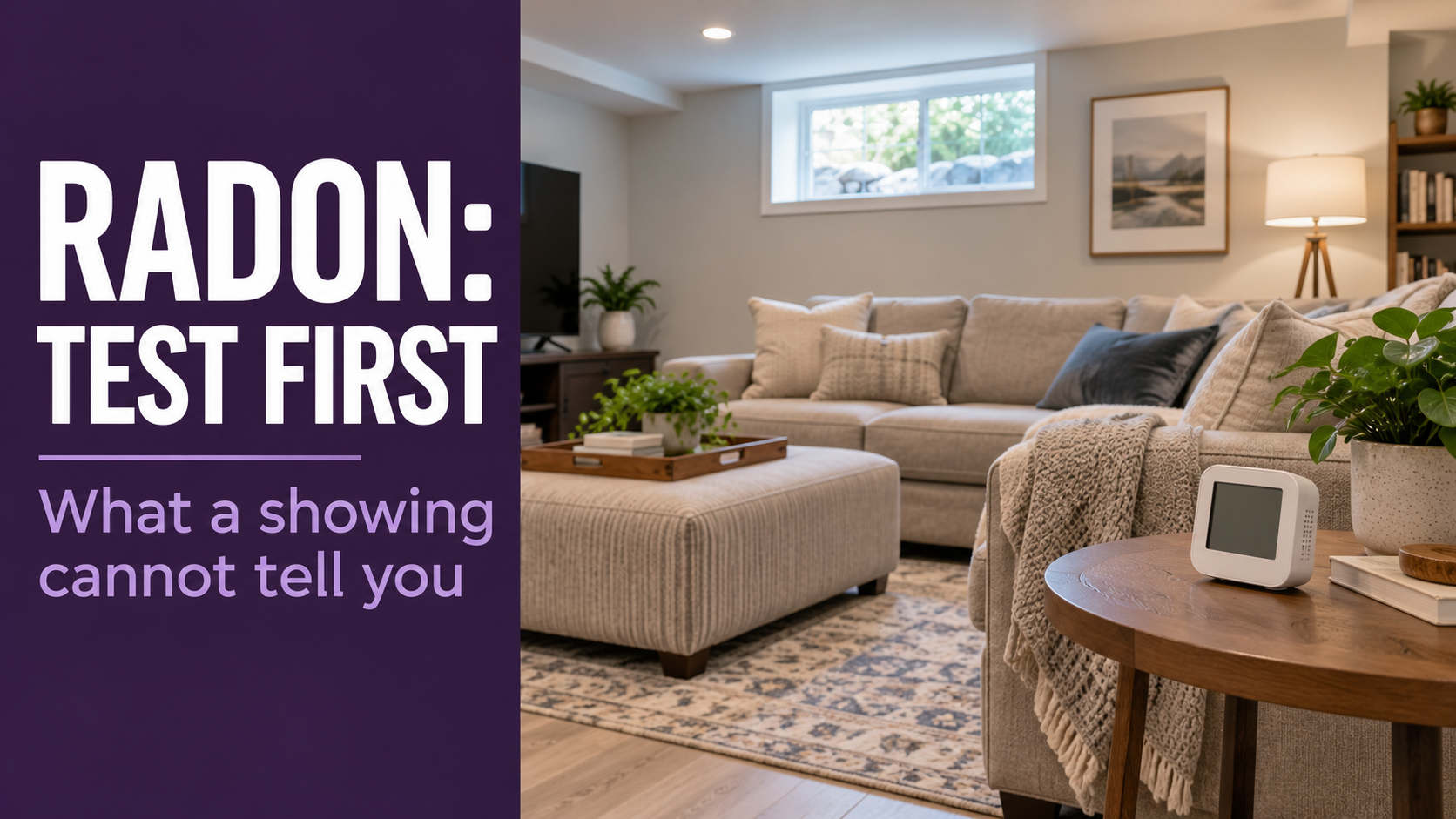
A showing tells us quite a bit about a house. Its radon level isn't one of those things. Fresh paint, a clean basement, and a well-kept yard don't answer that question, so I like to discuss testing when we first organize the inspections. The EPA explains that radon is a naturally occurring radioactive gas you cannot see or smell. Testing is the way to learn the level in the home. This is something we can investigate; there is no reason to guess from appearances.
If a neighbor says their house tested low, I would still want information about yours. The EPA’s Home Buyer’s and Seller’s Guide explains that nearby homes can have different indoor levels. Ask the seller for any earlier test results and records for a radon-reduction system. A qualified tester can help determine what additional testing makes sense for this purchase.
If the reading is elevated, we need a plan rather than a guess about the cost. The EPA recommends fixing a home at 4 pCi/L or higher, and explains that lower levels still carry risk. Have a qualified professional explain the reading, appropriate follow-up, and what mitigation would involve. You do not need to become a radon specialist to make an informed decision.
Give the tester enough time to do the work properly. The EPA real estate guide describes continuous-monitor testing of at least 48 hours. Testing conditions matter, too, so this needs coordination with the people occupying the home. I would schedule it alongside the other inspections with the contract deadlines in front of us.
I would also ask who will review the report with you and when it will be available. Scheduling the device is only part of the process; we need time afterward to understand the result and arrange any follow-up the professional recommends.
From there, we can get specific about any recommended system, installation cost, and follow-up testing. If the parties agree on payment or work before closing, that agreement needs to be documented. Sellers can help by having previous results and system records available. When we talk about your greater Atlanta purchase, let’s include this in the inspection conversation—the things we cannot see deserve attention alongside the things we can.
Every property and situation is different. These articles offer general considerations, not a property-specific valuation or a guarantee of results.
Explore more stories ↗Have a home or a question in mind?
Tell me where you are looking or selling, your timeline, and what you need help deciding.
Call Simon: 678-227-8749Text Simon: 678-227-8749 ↗