Buying · 5 min read
It’s Brand New. Should You Still Hire Your Own Home Inspector?
Builder walkthroughs, code inspections and your own inspection answer different questions.
 By Simon Mandell
November 22, 2026
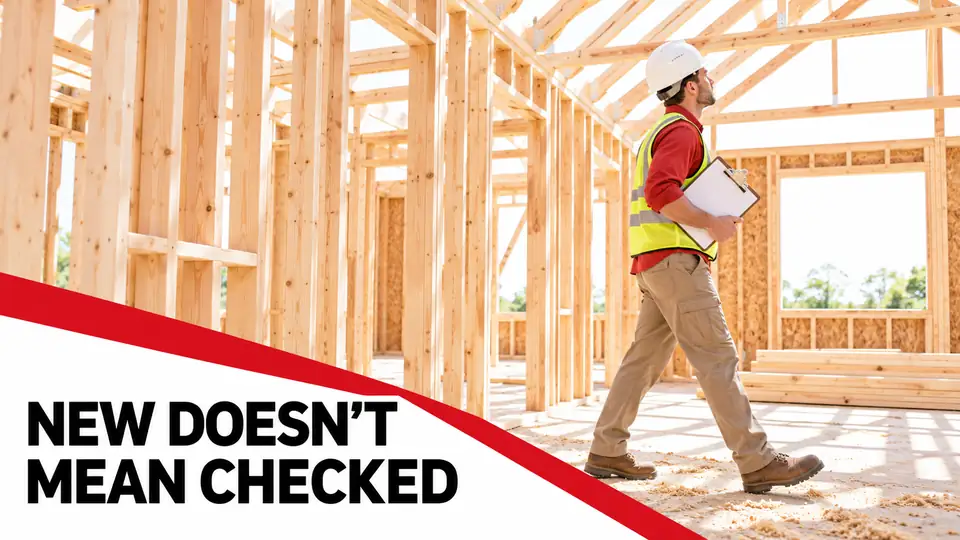
You’re buying a brand-new house. Nobody has lived in it, the appliances are new, and the builder tells you it has gone through the required inspections. Paying someone else to inspect it can feel like paying twice for the same thing.
I would look at it a little differently. New tells us when the house was built. It does not answer every question about how its components were installed or how they work together.
I’m not starting from the assumption that the builder did something wrong. I want you to have an independent assessment and enough time to deal with any findings before the moving truck is booked.
The Consumer Financial Protection Bureau recommends hiring an independent inspector who is accountable to you. It also distinguishes the inspection from an appraisal. The appraisal serves a different purpose; it is not a substitute for investigating the home’s physical condition.
Likewise, I would not treat a municipal inspection record as your personal inspection report. Ask the local building department what its approvals cover, and ask your inspector what their service includes. Those are separate questions. A private inspection does not replace required government approvals, and an approval does not eliminate the value of a buyer’s own evaluation.
The first conversation needs to happen before you sign the builder’s contract. Are independent inspections permitted? At what construction stages? How much notice must you give? What qualifications or insurance does the inspector need? How are findings submitted, and what does the contract say about resolving them?
Do not assume you can arrive with an inspector whenever you want or that an inspection automatically gives you a cancellation right. Your access and contractual options need to be understood in advance. The CFPB specifically advises new-construction buyers to ask when a builder deposit can be returned. If the answers in the contract are unclear, involve your agent and attorney before committing.
If the home is still being built, a pre-drywall inspection may be worth discussing. ASHI’s voluntary pre-drywall standards describe evaluation after certain structural and rough-in components are installed. They also require coordination and permission to enter. The inspection concerns visible, accessible components at that stage; it is not a guarantee of the whole building or a substitute for every specialist.
That timing matters because drywall can hide things an inspector could previously see. InterNACHI’s guidance notes that even insulation can obscure some components. Ask your inspector and builder to coordinate an appropriate window. Do not assume a calendar date will stay accurate as construction progresses.
If the house is already finished, we cannot go backward and pretend its concealed components are visible. We can still arrange an appropriate completed-home inspection and ask what remains outside its scope. A good report should help us identify questions, not give us the impression that every possible future issue has been ruled out.
Once the report comes back, I would separate a paint touch-up from a concern that needs a qualified trade professional or further evaluation. Both may belong on a list, but they do not deserve identical attention. Ask the inspector to explain the finding, its significance and the recommended next step. Then submit the requests through the builder’s documented process.
I would also want clarity about completion. What will be corrected before closing? Who confirms the work? Does a reinspection make sense? If something is proposed for later, have the contract, warranty process and any lender requirements reviewed before relying on that arrangement. “We’ll take care of it” is not enough detail when you are trying to decide whether to close.
Keep your inspection reports, correspondence, completion records and warranty documents together. Those records can make later conversations much easier. Read the warranty’s actual notice procedure and deadlines; do not substitute a general promise of coverage for the written terms.
If you’re considering new construction, send me the community, the stage of construction and the proposed closing date. We can put the inspection questions on the table before you sign, so the builder’s schedule and your opportunity to evaluate the home fit together. I want you excited about the new house and clear about what you’re buying.
Sources checked November 22, 2026: CFPB independent home inspection guidance; CFPB new-construction contract considerations; ASHI pre-drywall standards; InterNACHI pre-drywall inspection guidance.
Every property and situation is different. These articles offer general considerations, not a property-specific valuation or a guarantee of results.
Explore more stories ↗Have a home or a question in mind?
Tell me where you are looking or selling, your timeline, and what you need help deciding.
Call Simon: 678-227-8749Text Simon: 678-227-8749 ↗