Buying · 5 min read
Do I Need Flood Insurance If I’m Not Buying a Waterfront Home?
Look beyond lender requirements to drainage, insurance coverage, and the cost of owning a home.
 By Simon Mandell
October 14, 2026
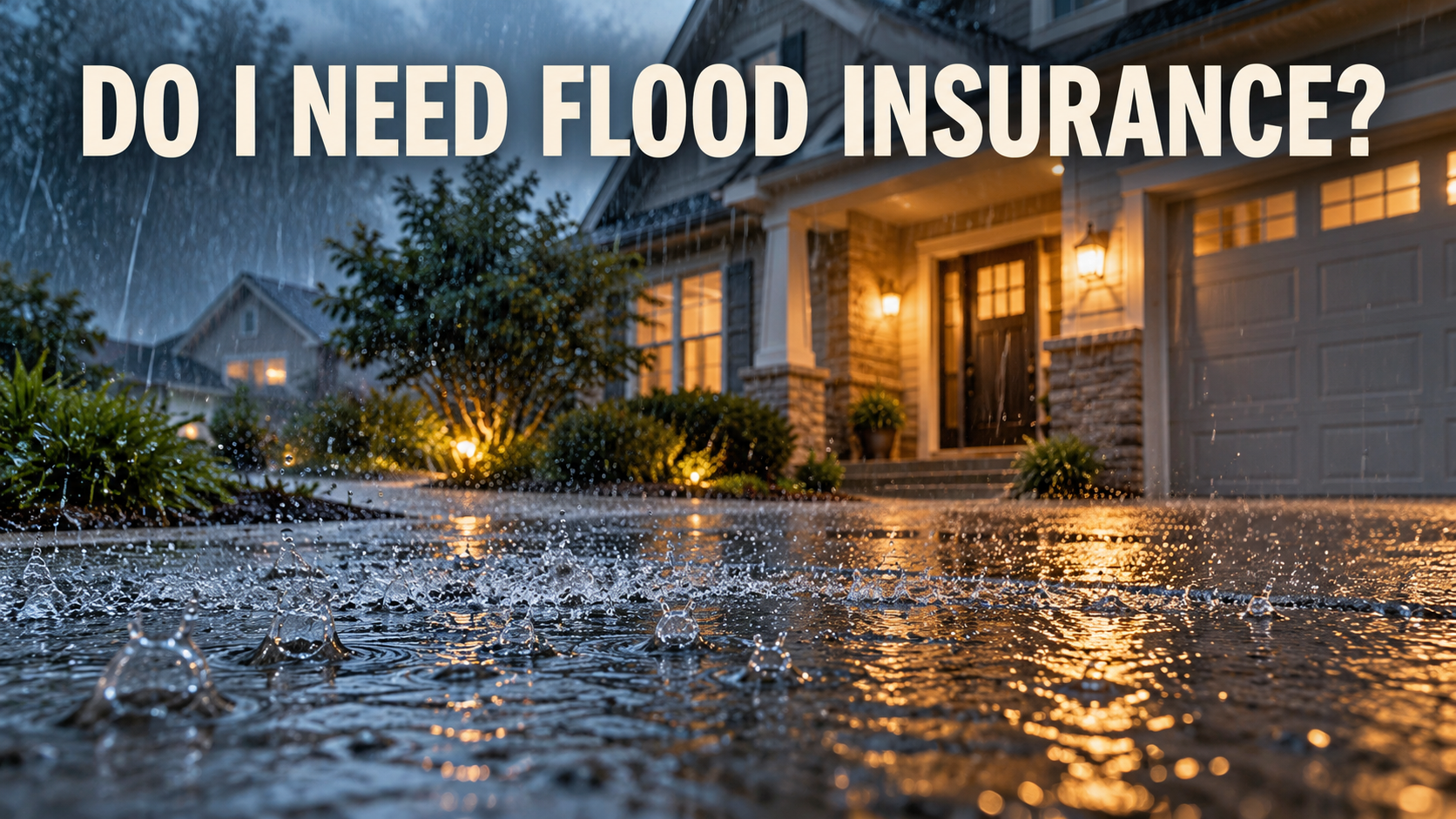
You don't have to be looking at a waterfront home for water to deserve a conversation. I would want to know what happens around the house in heavy rain, whether the seller has reported any problems, and what an insurance professional says about coverage. It is easy to stop at “the lender doesn't require flood insurance.” That answers a financing question. It doesn't settle whether you are comfortable with the exposure or whether you would want coverage anyway.
FEMA’s flood maps help identify flood hazards. Properties outside mapped high-risk areas can still experience flooding. Your lender’s insurance requirement is one part of the purchase. Your comfort with the property’s exposure is another. Start with the specific address and the FEMA flood map, then discuss coverage with an insurance professional. I wouldn’t make this decision from the listing description or an online map screenshot alone.
Most homeowners insurance policies do not cover flood damage. FEMA also warns that just one inch of floodwater can cause roughly $25,000 in damage. That figure is an illustration of the potential impact, not a repair estimate for every house. But it explains why a small amount of water can become a large financial problem. Ask your insurance agent to explain the differences between flood coverage, water backup coverage, and other water-damage provisions. Don’t assume they cover the same events.
While we are reviewing the records and arranging inspections, I would also walk the property with a few water questions in mind.
Ask about reported flooding, water intrusion, or previous drainage repairs. Look at whether the yard slopes toward the house, where downspouts discharge, and whether low areas sit near the driveway, basement entrance, or foundation. If the inspection raises a concern, find out what further evaluation is appropriate. We also need an actual coverage quote, not a guess about what insurance might cost.
Those observations help us ask better questions; they do not replace an inspector, drainage specialist, or insurance professional. A dry afternoon showing cannot establish what happens there during a downpour.
I would price coverage during due diligence so the expense belongs in the decision. A hypothetical $1,200 annual policy, for example, is another $100 a month in the ownership budget. That is an illustration rather than an Atlanta-area quote. Your property’s actual price and available coverage are what matter.
Timing matters, too. FEMA says NFIP policies typically have a 30-day waiting period, although exceptions apply, including certain mortgage-related purchases. Have the insurer confirm the effective date for your situation.
A drainage concern is something to investigate, not an automatic answer about whether to buy. Sometimes the next step is a specialist’s report; sometimes it is a coverage decision. Either may change what you are comfortable paying. Let’s get those answers while you have time to use them, rather than treat the insurance question as paperwork for closing week.
Every property and situation is different. These articles offer general considerations, not a property-specific valuation or a guarantee of results.
Explore more stories ↗Have a home or a question in mind?
Tell me where you are looking or selling, your timeline, and what you need help deciding.
Call Simon: 678-227-8749Text Simon: 678-227-8749 ↗