Buying · 5 min read
The Builder Is Offering $20,000. How Much Is That Incentive Really Worth?
Compare the full financing offer, usable incentives, and the real cost of a new home.
 By Simon Mandell
October 21, 2026
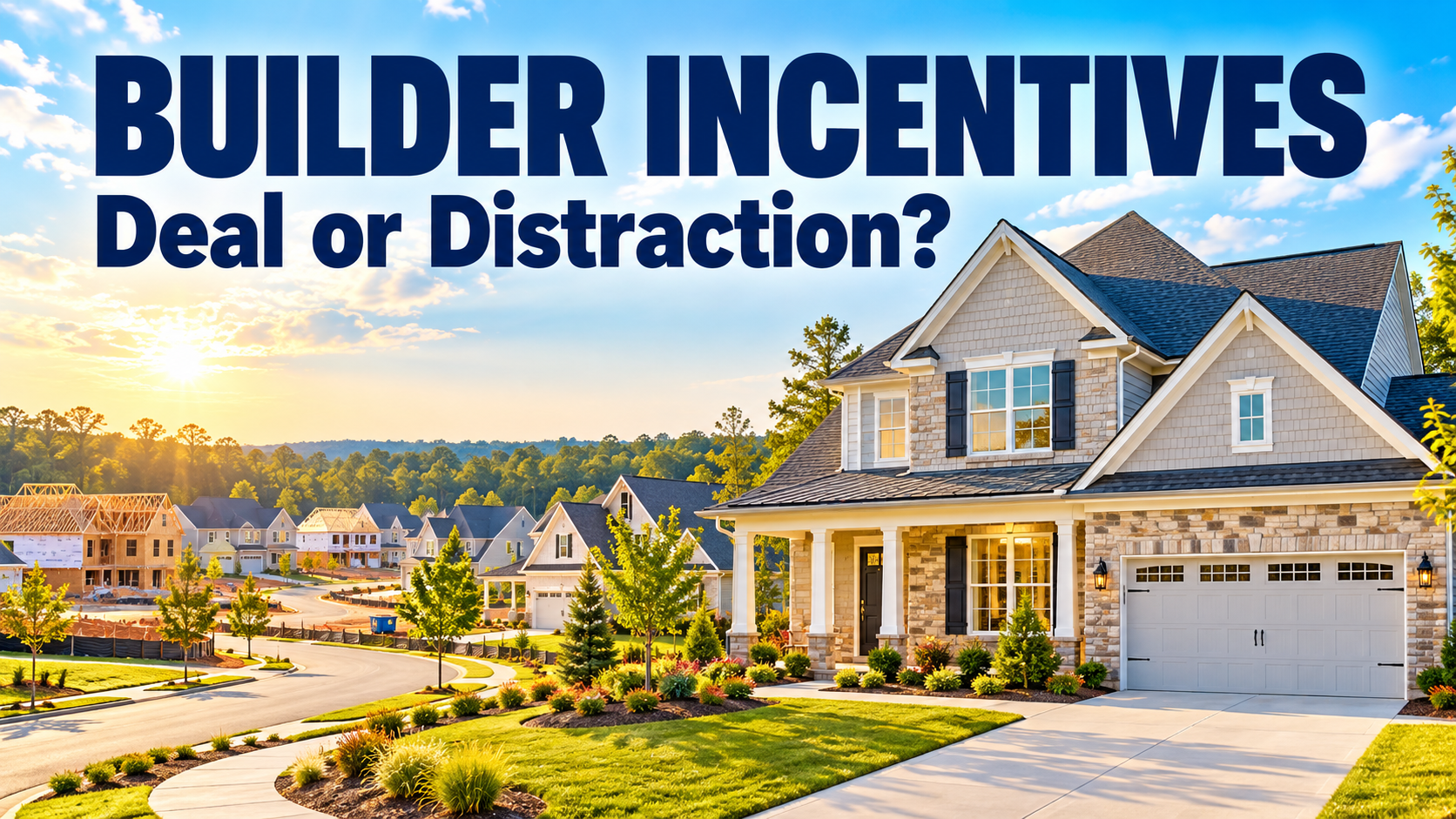
“The builder is giving us $20,000.”
That gets your attention. It would get mine, too. But before we call it $20,000 saved, I want to see where the money goes and what you have to agree to in order to receive it.
Can it pay closing costs? Buy down the rate? Cover upgrades? Does it require a particular lender or title provider? Is it limited to certain homes or a closing date you can realistically meet? Those details determine whether the incentive helps you.
Let’s use an example. Suppose the preferred lender’s comparable costs are $18,000, with a $15,000 builder credit you can fully use. Your remaining cost is $3,000. Another lender’s comparable costs are $10,000 with no credit. The first option saves $7,000 upfront, not $15,000, because we have to compare the expense along with the credit.
Now suppose that first loan’s payment is $100 higher each month. That’s $6,000 in additional payments over five years. We’d need to compare rates, points, loan balances, mortgage insurance, and your expected ownership period before deciding which loan is better. That simple payment comparison isn’t a complete break-even calculation; it shows why looking only at the credit can mislead you.
I want Loan Estimates using the same loan amount, type, term, and comparable rate-lock assumptions. If one quote includes several thousand dollars in discount points and the other doesn’t, let’s understand that difference. If one uses a lower tax estimate, that doesn’t mean the lender has made the taxes cheaper.
The CFPB’s Loan Estimate comparison guidance is useful here because the forms put the costs in a consistent format. We still have to read them.
Upgrades deserve the same attention. A $10,000 upgrade allowance may be worth a lot to you if it covers things you planned to buy. It may be less useful if it’s restricted to finishes you don’t particularly want. The builder’s retail price for an upgrade also isn’t proof that the improvement adds that amount to resale value.
And a closing-cost credit isn’t a bag of cash you take home. Your loan program limits how contributions can be used. For example, Fannie Mae does not allow interested-party contributions to fund the buyer’s down payment. Have the lender confirm what you can use before choosing the incentive.
A builder offer can be a good deal. I just want it to be a good deal after we’ve done the math.
Send me the incentive sheet and the home you’re considering. We’ll look at the finished price, the financing, and what the offer actually changes for your wallet.
Every property and situation is different. These articles offer general considerations, not a property-specific valuation or a guarantee of results.
Explore more stories ↗Have a home or a question in mind?
Tell me where you are looking or selling, your timeline, and what you need help deciding.
Call Simon: 678-227-8749Text Simon: 678-227-8749 ↗