Buying · 4 min read
Barndominium vs. Stick-Built: What to Know Before You Buy the Land
Compare the complete project, financing, approvals, and resale—not just the shell price.
 By Simon Mandell
November 15, 2026
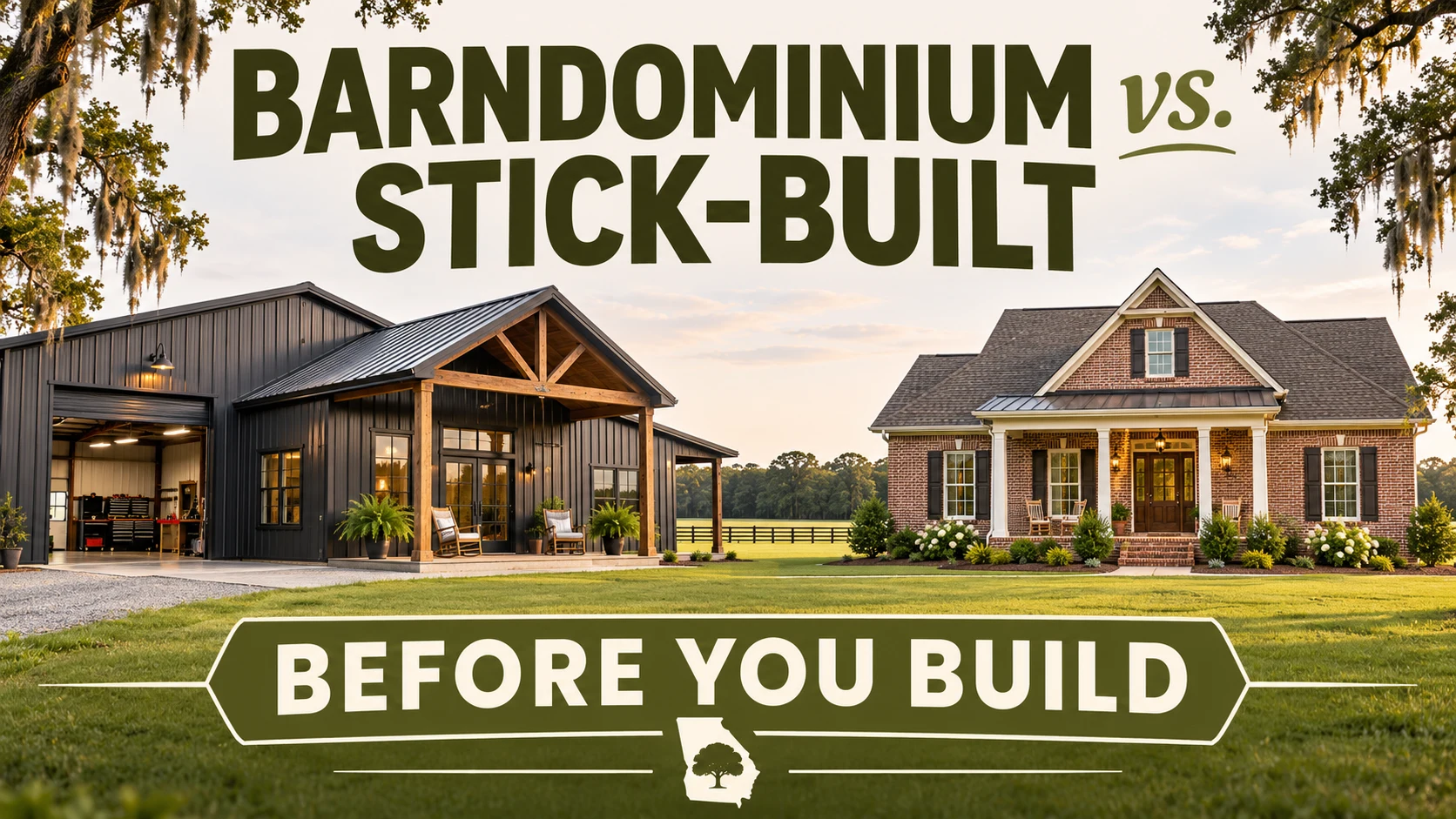
A big porch, open living space, and a workshop under the same roof sounds pretty good. Then you see the advertised building-package price, and it's tempting to start looking for land immediately.
Before you do, I'd want to sit down with the complete project budget. The shell is one part of the house. It isn't the number that tells you what moving in will cost.
“Barndominium” also doesn't tell us exactly how the home will be built. It often describes a barn-style residence, sometimes with substantial shop or garage space, but different structural systems can produce that appearance. “Stick-built” generally means construction with individual framing members. Let's compare plans, specifications, and written scopes rather than assume the exterior tells us about durability, energy performance, or maintenance.
I'd put both proposals on the same worksheet: land, survey, design and engineering, clearing, grading, driveway, foundation, utilities, water or well, septic or sewer, insulation, electrical, plumbing, HVAC, interiors, permits, and a contingency. Then we'd look at the items that tend to hide behind an attractive starting price.
| Question | What I'd want in writing |
|---|---|
| What is included? | Finished living area, shop/garage area, and exact specifications |
| What is excluded? | Site work, connections, fixtures, and allowances |
| What can change? | Change-order pricing, substitutions, and contingency |
| When can you move in? | Inspection requirements, completion conditions, and occupancy approval |
The lower quote may be a good value. It may also include less work. There's no universal discount that makes every barndominium cheaper than every conventional house.
The land needs its own investigation before you commit. Contact the planning and building offices for the actual jurisdiction about residential use, setbacks, access, design requirements, and the workshop or business activity you have in mind. Private deed restrictions need a separate review. Zoning approval doesn't answer every restriction on a parcel.
Georgia's Department of Community Affairs publishes the state construction-code framework. The local office can identify the permits, plans, and inspections required for your project. If you're relying on septic, verify feasibility with environmental health before treating the land as suitable for the home you want.
Talk to the lender before paying nonrefundable deposits too. Ask about construction financing, builder requirements, the permanent loan, insurance, and any effect of a large shop or business use. Fannie Mae's unique-housing guidance allows eligible nontraditional properties when the appraiser has enough information for a reliable market-value opinion. That isn't a guarantee every lender will finance your design.
You should build something that works for your life. I'd also look at how the finished property fits the local resale market. A workshop can be worth having without returning every dollar of construction cost later.
Send me the location and the plan you're considering. We can review nearby sales and the questions to take to your builder and lender before the exciting idea becomes an expensive commitment.
Sources originally checked November 15, 2026. Confirm the project's requirements with the responsible offices and professionals.
Every property and situation is different. These articles offer general considerations, not a property-specific valuation or a guarantee of results.
Explore more stories ↗Have a home or a question in mind?
Tell me where you are looking or selling, your timeline, and what you need help deciding.
Call Simon: 678-227-8749Text Simon: 678-227-8749 ↗