Selling · 5 min read
My Neighbor’s House Sold for More. Why Isn’t Mine Worth the Same?
Comparable sales, concessions, condition, and why price per square foot cannot explain the whole value.
 By Simon Mandell
October 14, 2026
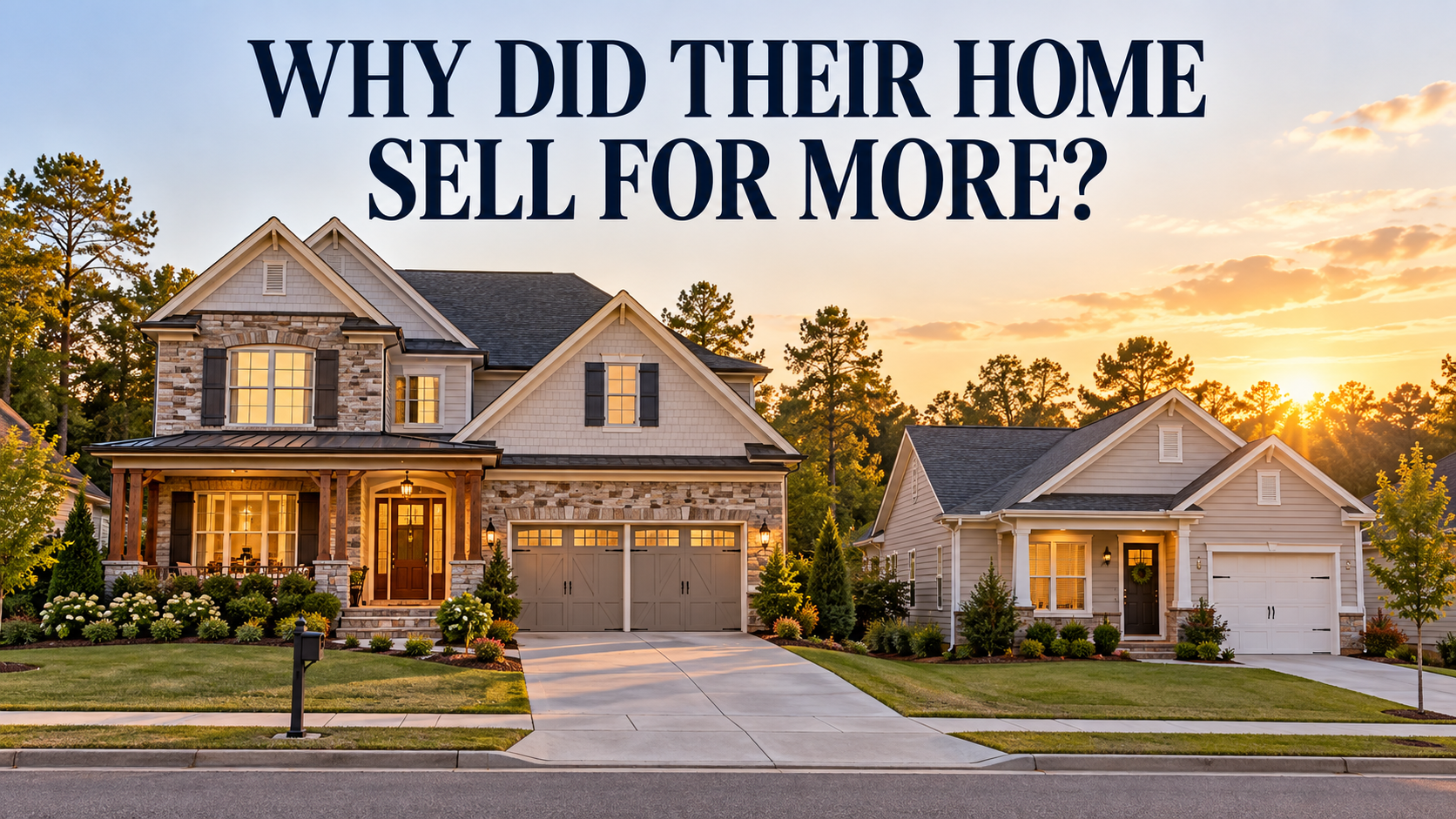
Let’s look at your home
Send me your address, recent improvements, and ideal moving timeframe. We’ll start with comparable sales, today’s competition, and what you want to walk away with.
Request my home analysis ↗Text Simon ↗If your neighbor sold for more than the number we’re discussing, of course you’re going to bring it up. I would, too.
Let’s pull up that sale and look at it.
I don’t want to dismiss it because it complicates my recommendation. I also don’t want to assume the same street means the same value. We need to see what that buyer actually purchased.
Start with the space. Is their house larger above ground? Do they have a finished basement? Is the layout similar? A bedroom count doesn’t tell us whether someone has to walk through another room to reach it.
Then look outside. Do both yards offer the same usable space? Is one driveway much steeper? Is one home next to a busy road while the other sits farther back? Those differences may affect who wants the house and what they’re willing to pay.
Price per square foot can make the comparison look easier than it is. Imagine a 2,000-square-foot home sells for $400,000 and a 3,000-square-foot home sells for $450,000. That’s $200 per square foot for the first and $150 for the second. Both calculations are right. Neither tells us that every additional square foot in your house should be worth that same amount.
We also need the condition and terms. Was the other house remodeled? Did the seller contribute toward closing costs? Was the market different when that buyer made the offer?
Concessions matter, but an appraiser doesn’t necessarily subtract them dollar for dollar. Fannie Mae’s adjustment guidance calls for considering their effect on the market price. We need to distinguish your proceeds from an appraisal adjustment.
You may have advantages the neighbor didn’t. I want those included, too. Bring me the improvement list and anything the public records don’t explain. We should be able to account for meaningful differences in both directions.
Sometimes the nearby sale is an excellent comparison. Sometimes a slightly farther property is more useful because the house and setting are much more similar. Fannie Mae’s comparable-sales guidance recognizes that similarity can matter more than simply being closest or newest.
Send me the address of the sale you have in mind. We can put the homes beside each other and work through the differences. If that evidence supports a different recommendation, I want us to recognize it.
Every property and situation is different. These articles offer general considerations, not a property-specific valuation or a guarantee of results.
Explore more stories ↗Your local selling plan
Have a home or a question in mind?
Tell me where you are looking or selling, your timeline, and what you need help deciding.
Call Simon: 678-227-8749Text Simon: 678-227-8749 ↗