Selling · 5 min read
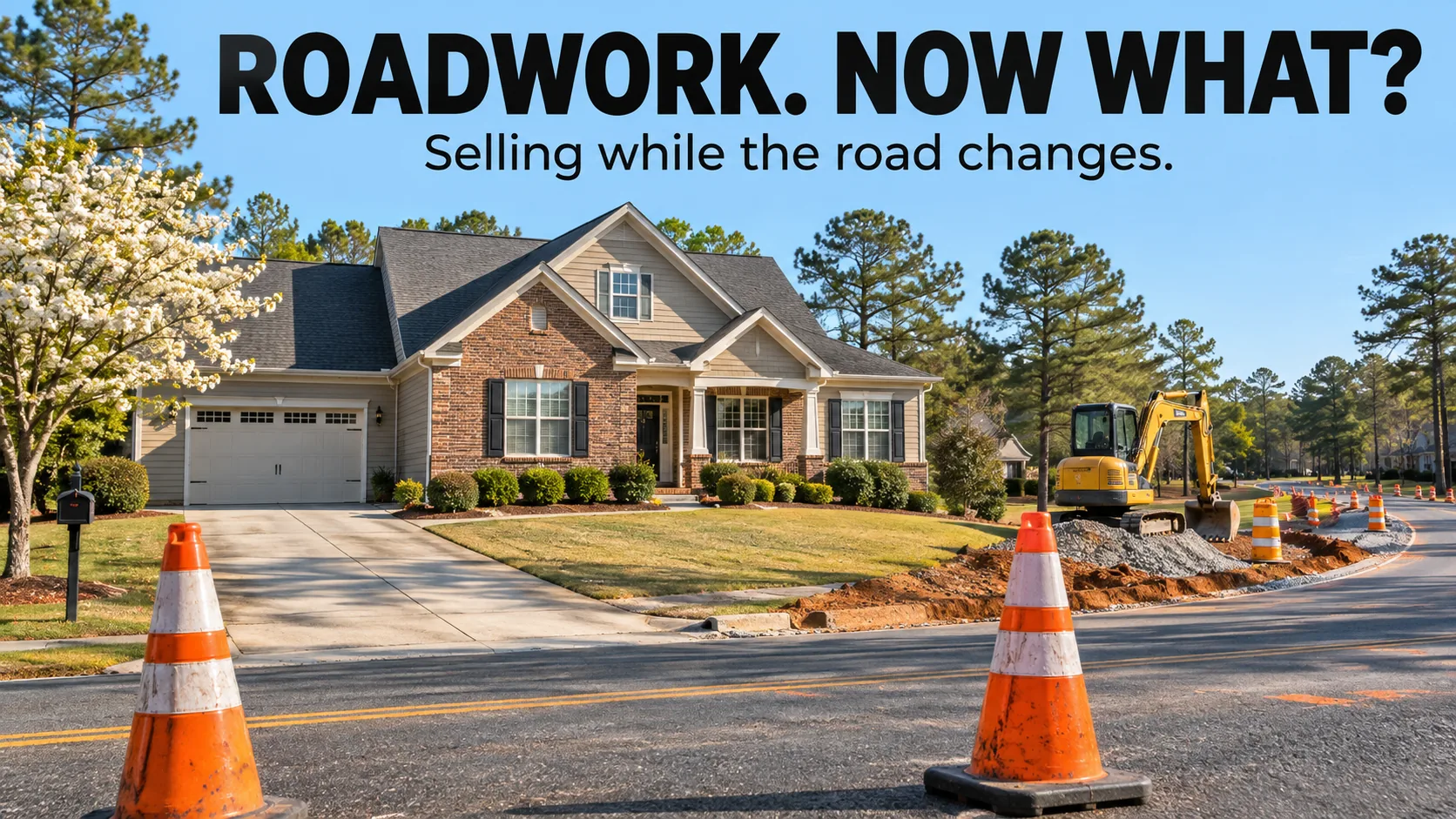
They’re Working on the Road Outside Your House. Can You Still Sell?
Separate construction inconvenience from permanent access changes, then build your pricing and showing plan around verified facts.
 By Simon Mandell
November 18, 2026
Let’s look at your home
Send me your address, recent improvements, and ideal moving timeframe. We’ll start with comparable sales, today’s competition, and what you want to walk away with.
Request my home analysis ↗Text Simon ↗You’re getting ready to list, and orange barrels show up outside the neighborhood. Now you’re wondering whether you missed your chance.
Not necessarily. But the roadwork is there. We can’t pretend it isn’t. What we can do is find out what’s happening, what it changes, and make sure buyers have accurate information before they decide what your house is worth.
The first question I’d ask is whether we’re dealing with temporary inconvenience or a permanent change to the property’s use. Resurfacing and a temporary detour are different from a widening project that changes the driveway, removes a buffer, or changes how you turn into the road. Buyers will have questions about both. The answers won’t be the same.
Georgia DOT’s project search provides a starting point for state projects, including project information and available documents. Its right-of-way resources explain how to research plans and find information when property is needed for transportation work. For a county or city job, we need the local transportation or public works office instead. The crew outside may also be doing utility work rather than a road expansion.
I want the project number, the responsible agency, the latest written update, and a contact who can explain the part affecting your address. A program year or proposed completion date is not a guarantee that the cones disappear that month. Design, funding, right-of-way acquisition, and actual construction are different stages.
Here’s what I would want answered
- Can buyers reach the driveway safely, and are there temporary access restrictions?
- Will the finished project change turns, sightlines, drainage, sidewalks, or the distance from traffic to the house?
- Is any part of your parcel involved in an easement or acquisition?
- What work remains, and what does the agency currently say about timing?
- Are there written notices, agreements, or plans a buyer and closing attorney should review?
If land or legal rights are involved, bring the closing attorney into that conversation early. A real estate pricing discussion doesn’t replace advice about an acquisition, compensation, or recorded rights.
Then we make it easier to see the house. I’d provide clear, current showing directions and explain the approved access route. Keep agents informed when a detour changes. If there are workable showing windows with less disruption, use them without concealing the normal conditions. Buyers still need an honest picture of what they’re buying.
Photos should represent the property accurately. We can show its strengths without editing out a material road condition or presenting an imagined finished project as today’s view. If we share an agency rendering, identify it as a proposed or planned view and cite its source.
What about price? I would not automatically subtract 5% or 10%. There isn’t a verified universal roadwork discount I can apply to your house. We need comparable sales, competing listings, actual access changes, and buyer feedback. Nor would I promise that an improved road automatically increases the value. Better connectivity and a less private front yard can exist in the same project.
Real estate runs on time and money. You could add convenience. Waiting for work to finish may make showings easier, but you still have the cost of owning the home—and construction dates can move.
For illustration only, if carrying the house costs you $2,000 a month in cash outflow, waiting three months requires another $6,000. Some mortgage principal may build equity, so that isn’t all an economic loss. Still, it is cash you need. We should compare that with a realistic reason to expect a better result later, not just the hope that waiting fixes everything.
Send me your address and any project notice you’ve received. Let’s find out what the work actually changes, what your options cost, and whether selling now or waiting makes more sense for you.
Sources and project verification
Sources checked November 18, 2026. This article does not assert a permit status or completion date for a particular project. The carrying-cost example is hypothetical; property effects require parcel-specific research.
Every property and situation is different. These articles offer general considerations, not a property-specific valuation or a guarantee of results.
Explore more stories ↗Your local selling plan
Have a home or a question in mind?
Tell me where you are looking or selling, your timeline, and what you need help deciding.
Call Simon: 678-227-8749Text Simon: 678-227-8749 ↗