Selling · 4 min read
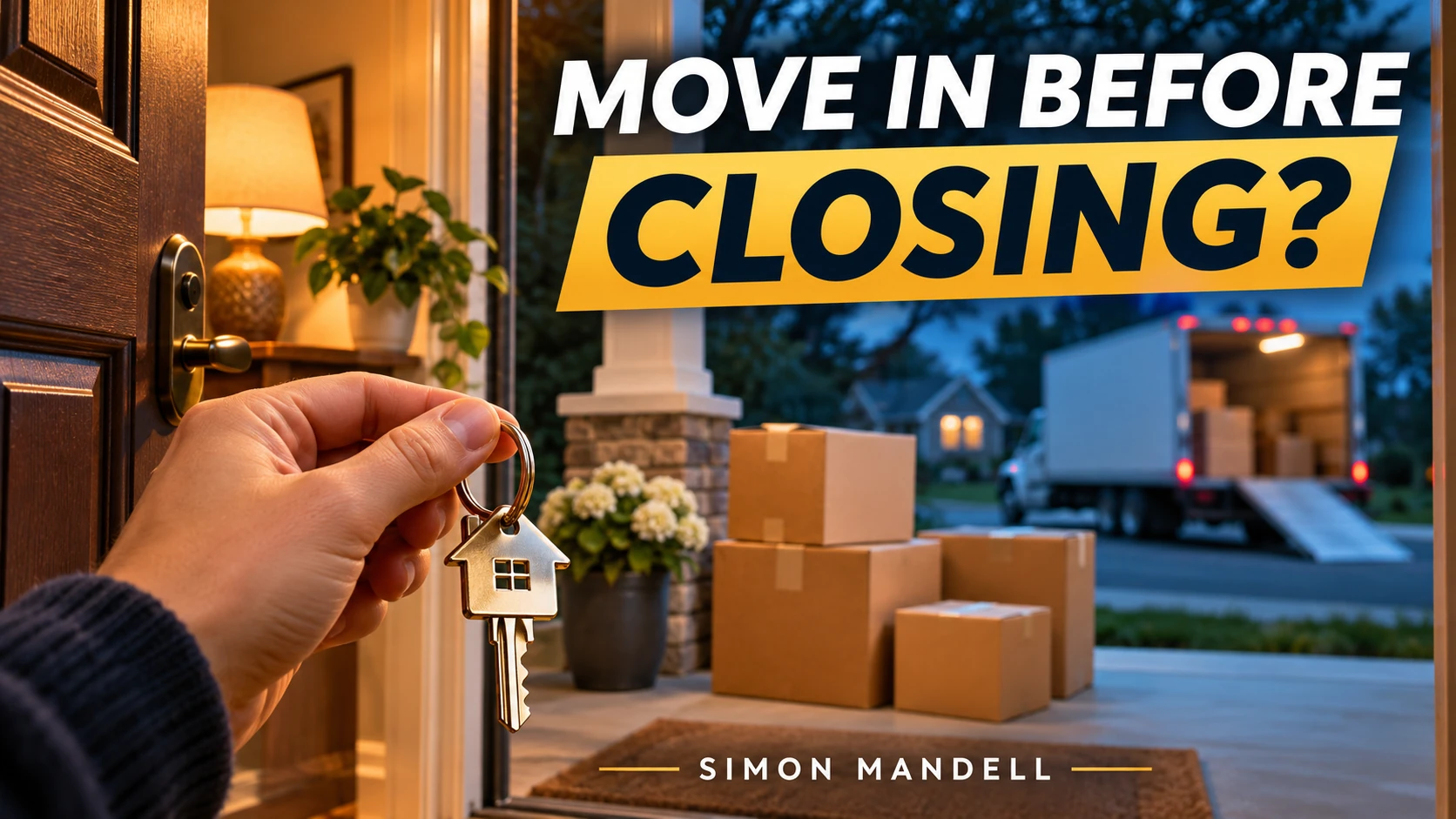
A Buyer Wants to Move In Before Closing. Should You Agree?
The house is empty and closing is only days away. Before agreeing to early possession, consider what happens if the sale doesn't close as planned.
 By Simon Mandell
November 18, 2026
Let’s look at your home
Send me your address, recent improvements, and ideal moving timeframe. We’ll start with comparable sales, today’s competition, and what you want to walk away with.
Request my home analysis ↗Text Simon ↗Your buyer wants to move in three days before closing. The house is empty, so you're thinking, what's the big deal?
I understand. You want to help them out, and we're supposed to close Thursday anyway.
But let me ask you this. What happens if we don't close Thursday?
They've moved their furniture in. You still own the house. You haven't received your money. Now we've got something else to figure out besides getting the sale closed.
I'm not saying we can't consider it. I'm saying we need to understand what happens if things don't go as planned before we hand over the keys.
Moving dates can be difficult. Their lease might be ending. Their furniture might already be on a truck. You might genuinely want to help. None of that changes the fact that the sale hasn't closed yet.
For a hypothetical example, let's say they move in Monday and the lender needs another document Tuesday. The Thursday closing gets pushed. Maybe it gets resolved quickly. Maybe it doesn't. Who is paying the expenses during that extra time? What if something gets damaged? What if the buyer ultimately can't purchase the house?
Those are questions I'd rather answer before there's a moving truck in your driveway.
Georgia REALTORS has a form specifically for buyer occupancy before closing, F222. There's a separate form for a seller staying after closing. [1] So I wouldn't casually borrow an arrangement from another transaction and assume it covers this one. We need the appropriate agreement reviewed for your circumstances.
I'd involve the closing attorney and get the lender and insurance professionals' input. Putting something in writing matters, but a signed agreement alone doesn't answer every insurance or loan question. We need to know what is acceptable and what coverage applies.
Then we get specific. When can they move in, and when must they leave if the sale doesn't close? Is there a charge or deposit? Who handles utilities and damage? Can they make changes to the house? What happens if the dates move?
I would want all of that addressed while everybody is getting along. If the arrangement ends and someone won't leave, we need legal guidance on the proper process. You don't want to be figuring that out by changing locks or moving their belongings.
And before we agree to early possession, let's price the alternatives. A few nights in a hotel, short-term housing, storage or a different moving date may be inconvenient. But we can put a number on those options. That gives us something to compare with the responsibilities you're taking on.
Depending on the negotiation, a properly documented contribution toward an alternative may be worth discussing with the lender and closing attorney. That doesn't mean the seller automatically owes it. It's an option to evaluate, not an obligation I'm creating for you.
This is why I don't look at an offer as just a purchase price. Dates and possession terms have value, too. A buyer asking you to take on additional responsibility is asking for something, even if the price on page one stays the same.
I've worked with more than 350 families buying or selling homes. Getting people from one house to the next is a big part of the job. I want to make that as manageable as I can, but I also want you to understand what you're agreeing to.
If a buyer asks to move in early, let's talk before you say yes. Bring me the dates and the reason for the request. We'll look at the alternatives and get the right people involved before any keys change hands.
Sources
[1] Georgia REALTORS: Current forms index, including F222 and F219.
[2] Georgia REALTORS: Legal FAQs and closing-attorney guidance. Reviewed November 18, 2026. Occupancy arrangements need transaction-specific legal and insurance review.
Every property and situation is different. These articles offer general considerations, not a property-specific valuation or a guarantee of results.
Explore more stories ↗Your local selling plan
Have a home or a question in mind?
Tell me where you are looking or selling, your timeline, and what you need help deciding.
Call Simon: 678-227-8749Text Simon: 678-227-8749 ↗